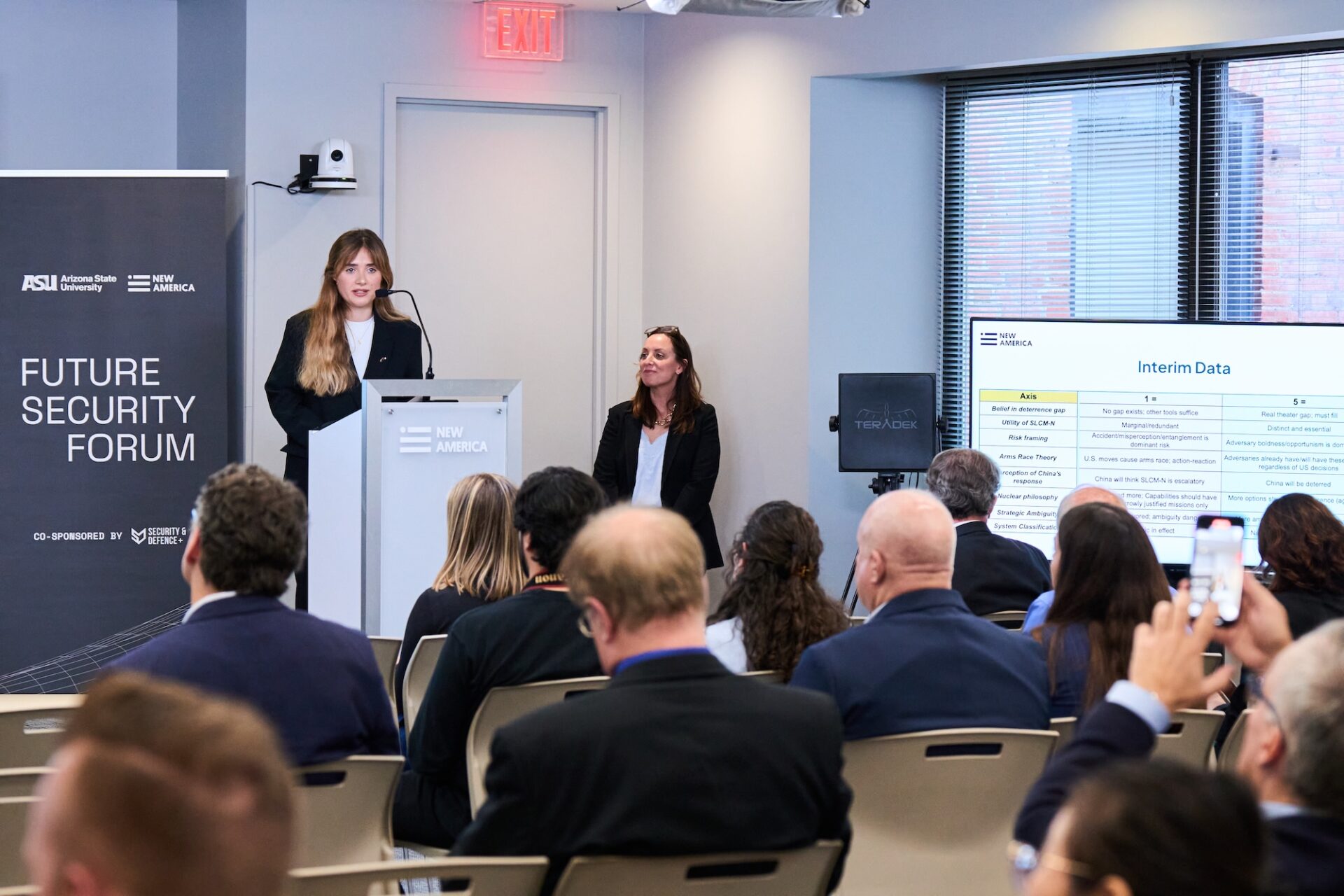
On October 21, New America and Arizona State University’s Future Security Initiative hosted the eleventh Future Security Forum in Washington, DC. For the second year running, the conference was held in collaboration with Security & Defence PLuS.
The Forum convened policymakers, military and government leaders, analysts and scholars to discuss the evolving landscape of global security, from alliances and diplomacy to national intelligence and leadership, AI and defence technology to food security and warfare strategy.
Opening the day, Dr Ian Langford, Executive Director of Security & Defence PLuS, welcomed attendees alongside Anne-Marie Slaughter, CEO of New America, and ASU President Michael Crow. Together, they underscored the Forum’s mission: to anticipate future threats, imagine new models of collaboration, and inspire creative thinking to build stability in an increasingly uncertain world.

The Future of the UK–US Relationship
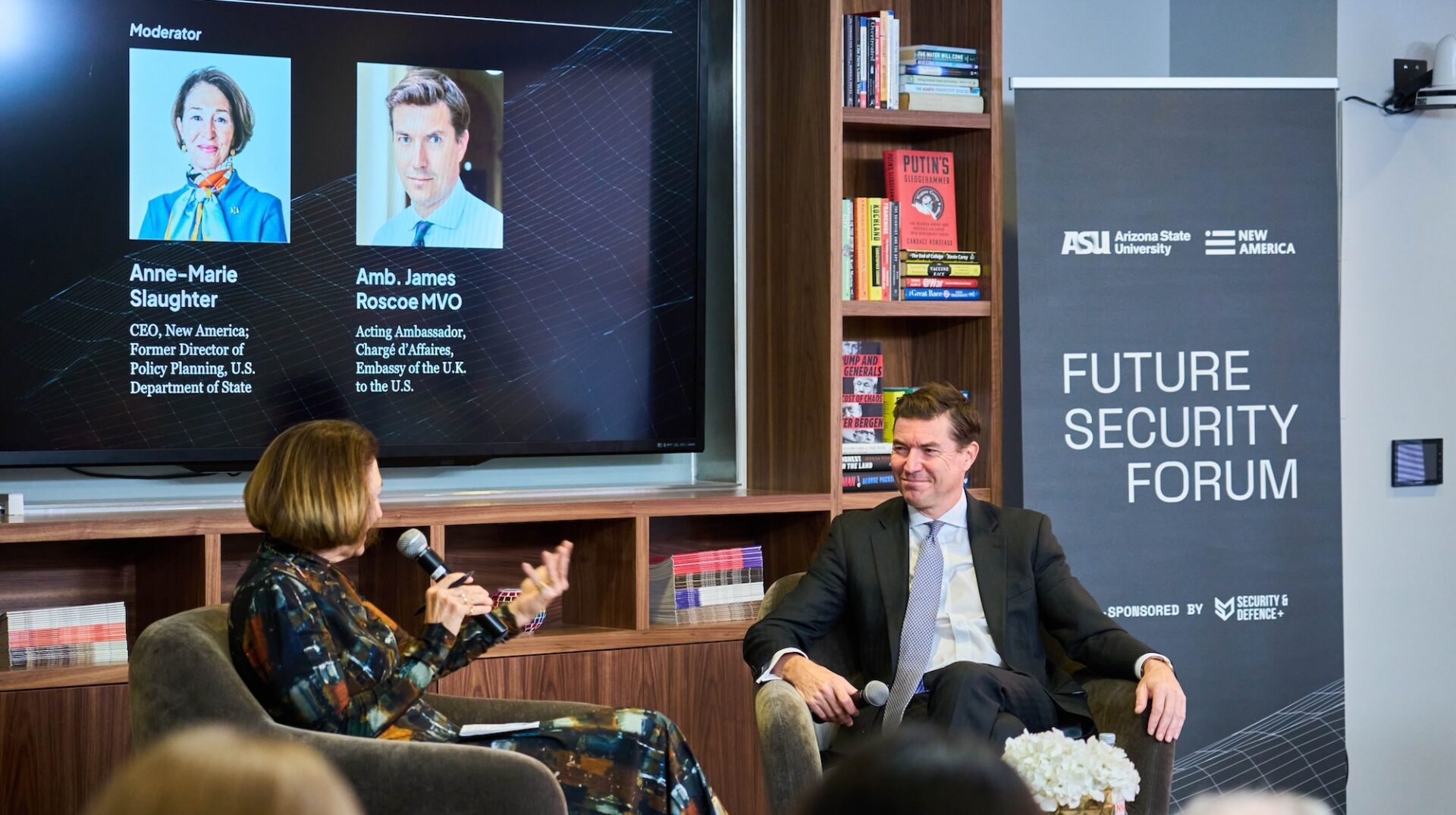
In the first session of the Forum, Ambassador James Rosco MVO, Acting Ambassador and Chargé d’Affaires at the Embassy of the UK to the US, joined Anne-Marie Slaughter to discuss Britain’s evolving role in global security after Brexit.
“From a security perspective, we have tried to lean back into Europe, we have asserted ourselves in NATO much more strongly as a leader.. we have led the push for enhanced NATO spending at 5%, but we are always conscious that our core security and intelligence relationship is with the United States.”
He reflected on the UK’s position as “a bridge between Europe and the United States” and emphasised that renewed alliances and shared resilience are central to achieving “real deterrence from increasing threats”.
Global Flashpoints: Ukraine, Russia and the Middle East
Turning to the war in Ukraine, Rosco emphasised continued resolve and called for renewed diplomatic engagement to “bring the parties to the table.”
“We have been one of the leading partners in giving them [Ukraine] the weapons and intelligence they need to resist this Russian invasion.”
In a later session, Candace Rondeaux, Senior Director of Planetary Politics & Future Frontlines at New America, observed Russia’s strategic vulnerabilities:
“His [Putin’s] fundamental weakness is that he relies on ad hoc actors’ relationships and encouraging rivalries between potential leaders that might replace him in order to control the system.”
Looking to another volatile region, Brett H. McGurk, former White House Coordinator for the Middle East under President Biden, joined Peter Bergen to discuss the state of the Middle East.


While regional conflicts highlight immediate security challenges, speakers also stressed that stability in the 21st century depends on addressing broader, interconnected issues that extend beyond traditional military considerations.
Climate, Economy, and Food Security as National Resilience
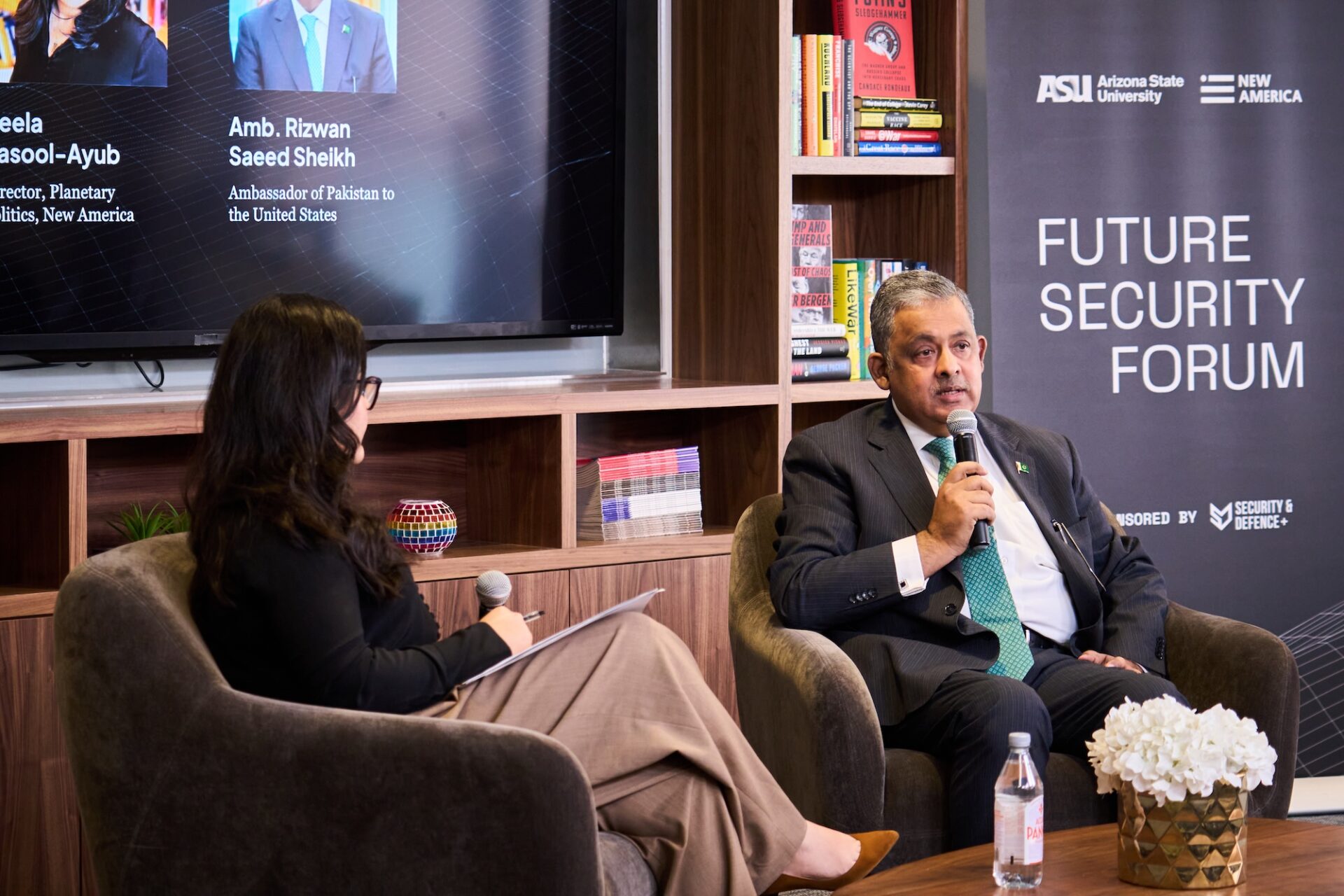
In a conversation with New America’s Heela Rasool-Ayub, Pakistani Ambassador Rizwan Saeed Sheikh emphasised that Pakistan’s diplomacy today is deeply intertwined with climate policy and economic security. Referencing the country’s devastating floods, he remarked: “climate is not an abstract for Pakistan,” but “real, clear and present danger”.
Other contributors explored the broader forces shaping national resilience. Former US Senator Kyrsten Sinema highlighted the vulnerability of supply chains for critical minerals and essential resources, observing:
“We still are utterly dependent on volatile foreign sources who do not share our interests globally for elements of our supply chain, the same is true for elements of our food supply.”

Anticipating and Responding to Future Threats
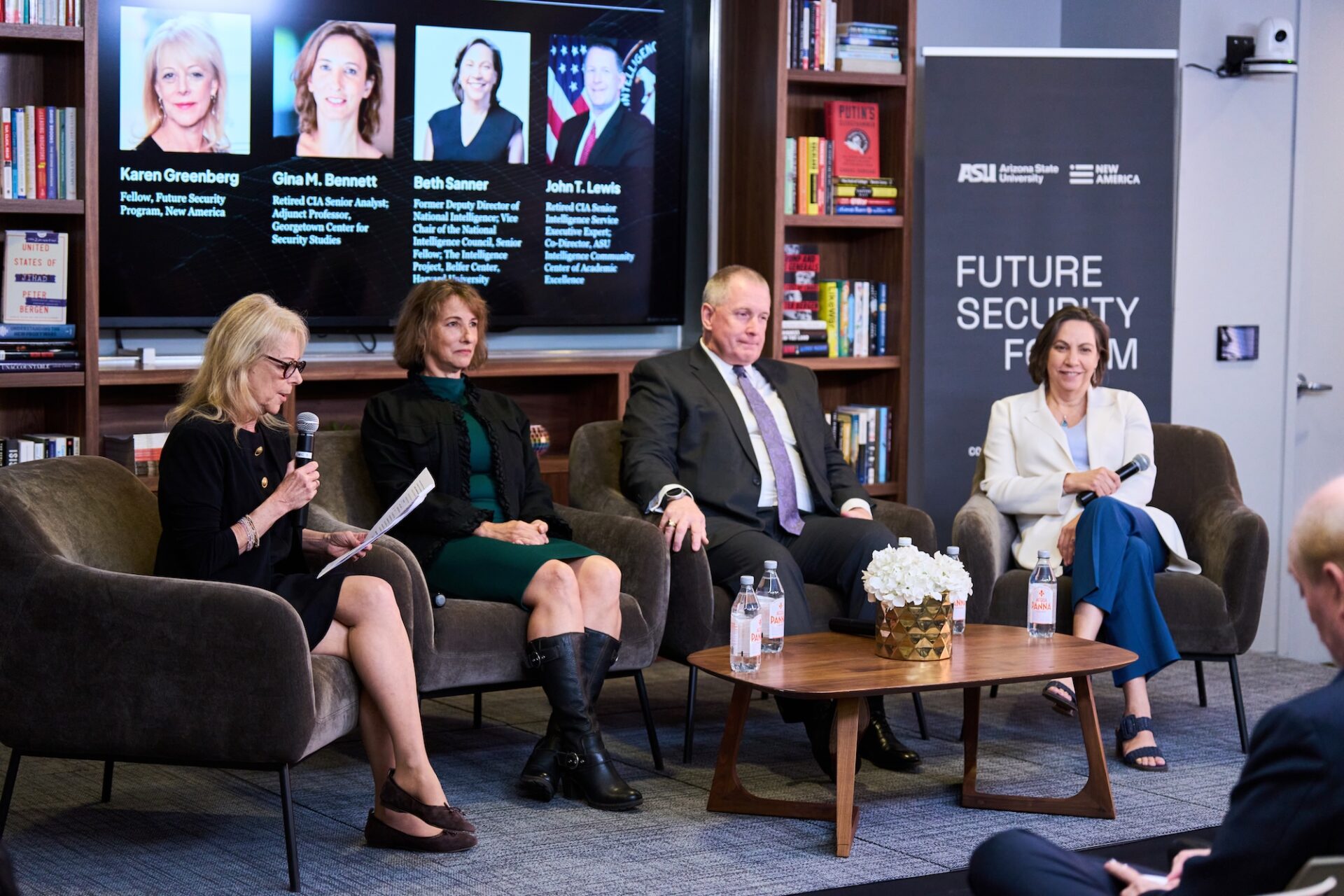
In a panel discussion moderated by Karen Greenberg, senior intelligence leaders discussed the key challenges facing their field of practice and strategies for adapting to emerging risks. Beth Sanner cautioned:
“We are having trouble with politicisation and labelling things is getting in our way. We need to focus more on actions.”
John T. Lewis noted that while the intelligence community excels at analysing current and near-term threats, it must adopt a more strategic, horizon-scanning approach. Gina Bennett also urged a mindset shift:
“We need to start thinking like our life depends on it. Our survival depends upon our ability to think.”
Bennett also warned against over-reliance on artificial intelligence:
“Generative AI feeds on some of the worst traits of humanity — laziness and greed — and we’re going to let it think for us and then decide for us.”
AI, Innovation, and Human Problem-Solving
Across the Forum, the transformative power and potential peril of artificial intelligence emerged as a defining theme, with speakers emphasising the need to use AI as a tool, not a substitute, for human thought. Senator Mark Kelly (D-Ariz.) explained:
“AI is transforming everything from decision-making on the battlefield to predictive maintenance… Our challenge is going to be how to strike a balance between speed and responsibility to harness AI’s power without making mistakes that could get Americans killed or even start wars.”
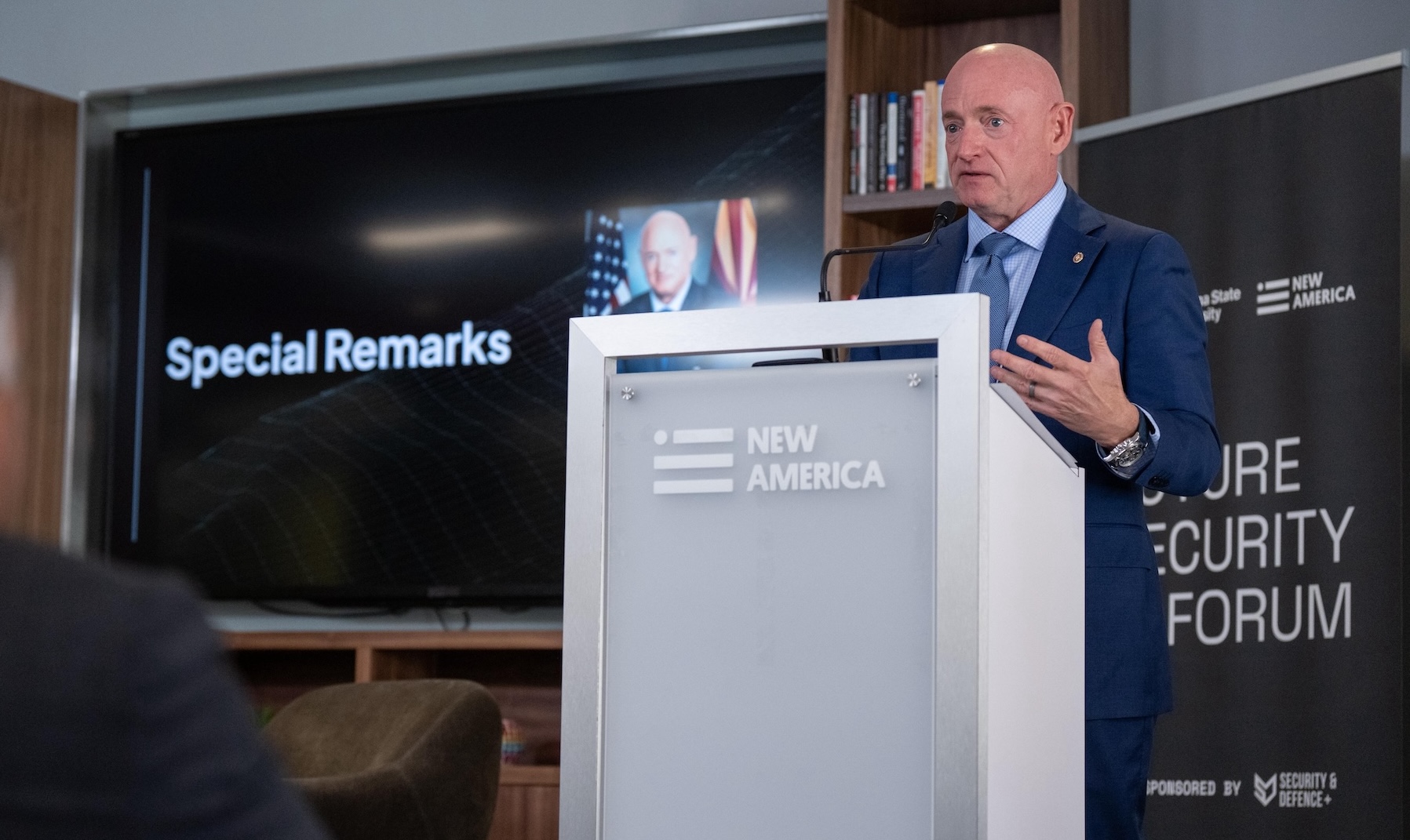
He underscored the importance of keeping “a human in the loop” for lethal decision-making and called for stronger energy and data infrastructure to support modern defence.
Building on this, Peter W. Singer said:
“Any future victory will still depend on the thinkers, even in a world of algorithms. If we want our war-fighters to be war-winners, they will need to be problem solvers who can make instantaneous high stakes decisions and leverage machine speed technology and mass amounts of data.”
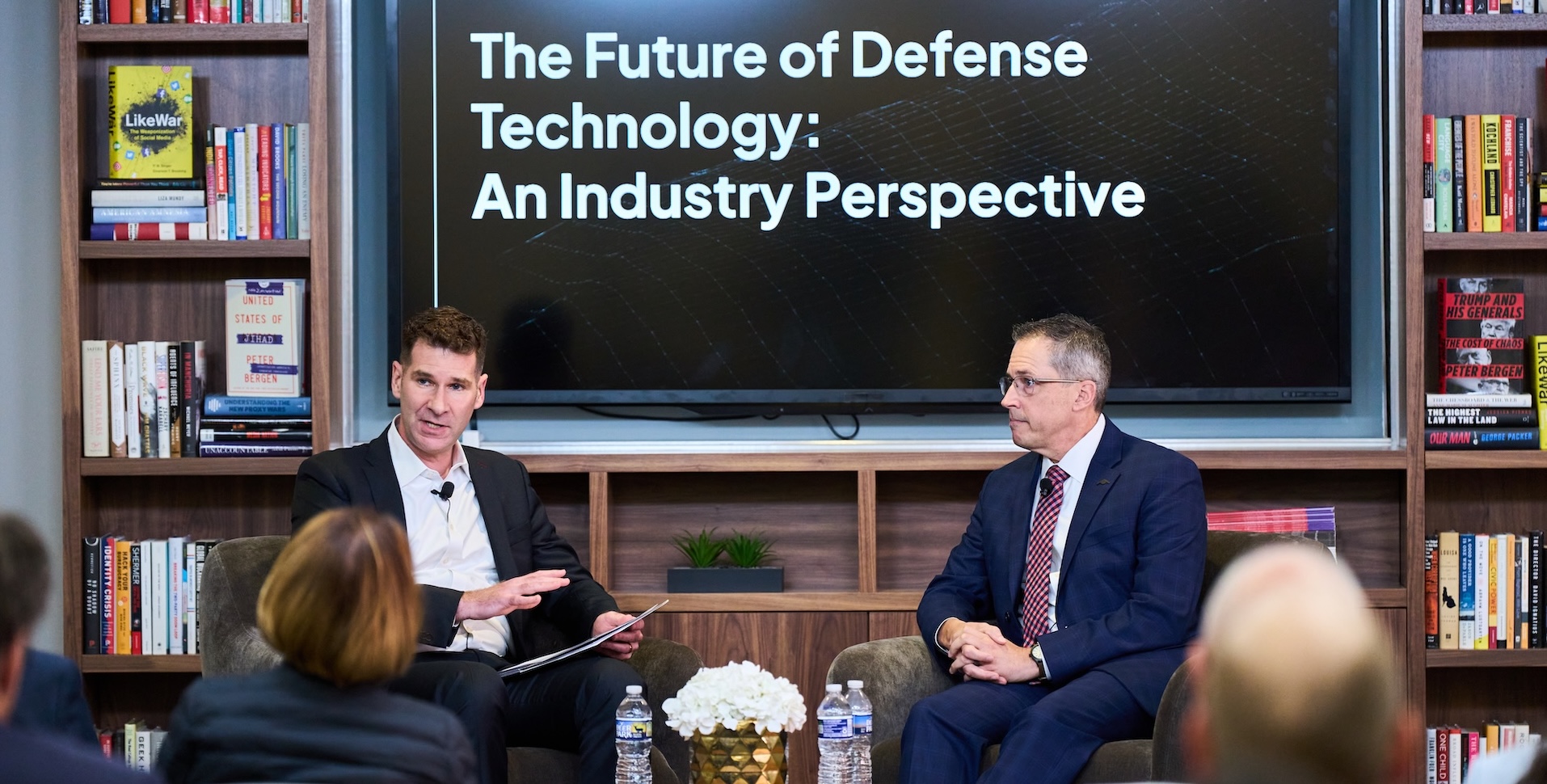
Several sessions underscored that human thinking, creativity, and adaptability remain at the heart of effective security strategy, even as technology reshapes the landscape.
Amy Nelson captured this when unveiling New America’s Future Security Scenarios Lab, a new initiative that will use forecasting, horizon scanning, scenario planning, complex systems analysis, simulations, and strategic wargaming “not to predict the future, but to expand the range of futures we can prepare for.”
The Role of Leadership in the Future of Conflict
While discussions on technology and innovation underscored the enduring importance of human judgment, the Forum’s keynote turned to the qualities that define effective leadership in high-stakes environments.
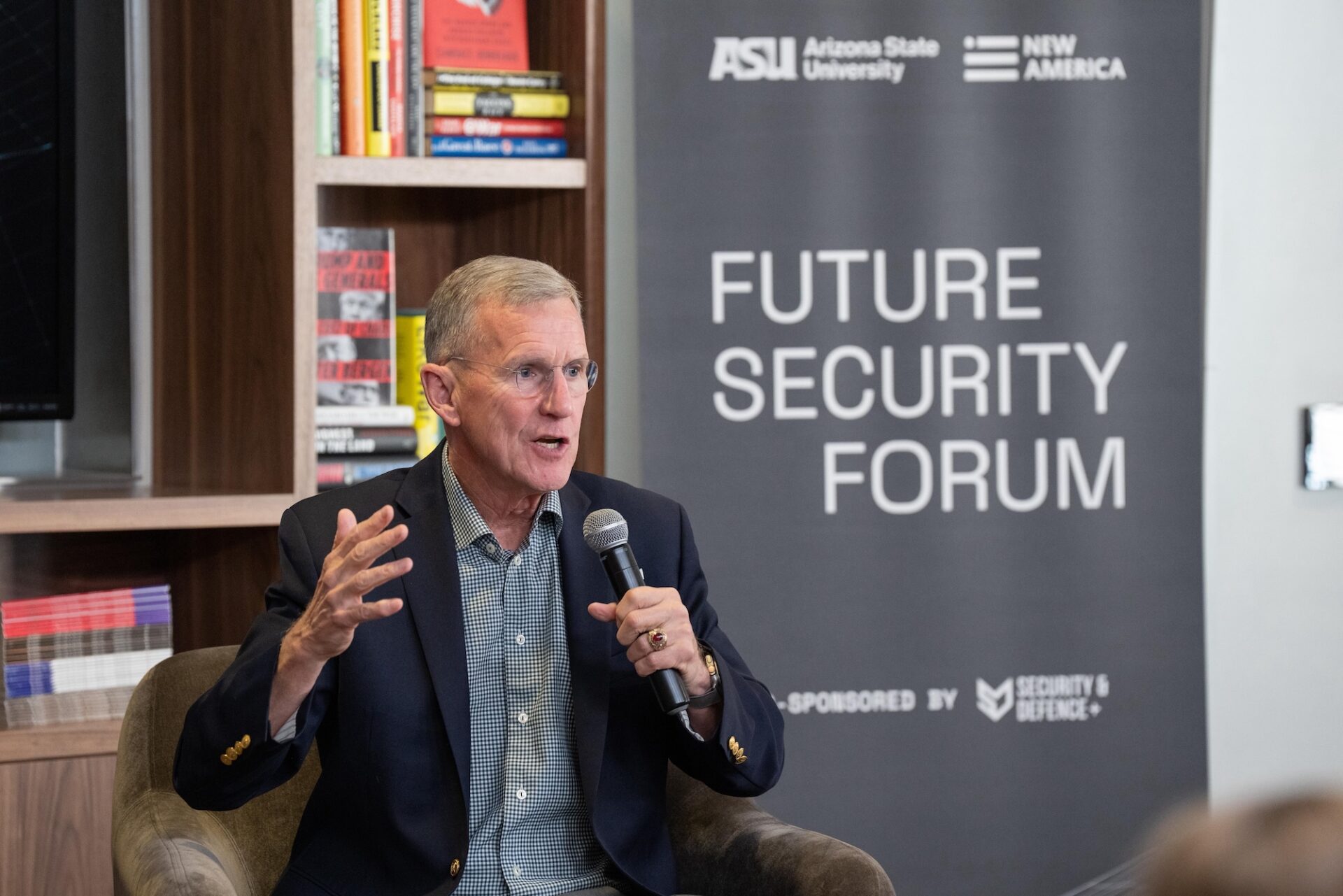
Reflecting on his own career and recent book On Character, General (Ret.) Stanley McChrystal, explored the ethical foundation, discipline, and integrity required to act responsibly amid uncertainty and moral complexity.
“Character is who we are… it’s measured not by what you say, not by what you write, but by what you do. In moments where it is tested, you’ll find out what your character is.”
The 2025 Future Security Forum reinforced that our security depends on anticipating tomorrow’s challenges and building resilience for decades to come. As Senator Kelly reflected:
“We need to start thinking 10, 20, 30 years from now, I know our adversaries do that.”
Security & Defence PLuS extends sincere thanks to all speakers and participants for their insights and collaboration. The full event recording is available to view online here: Future Security Forum 2025.