
25 years on, looking back before looking forward
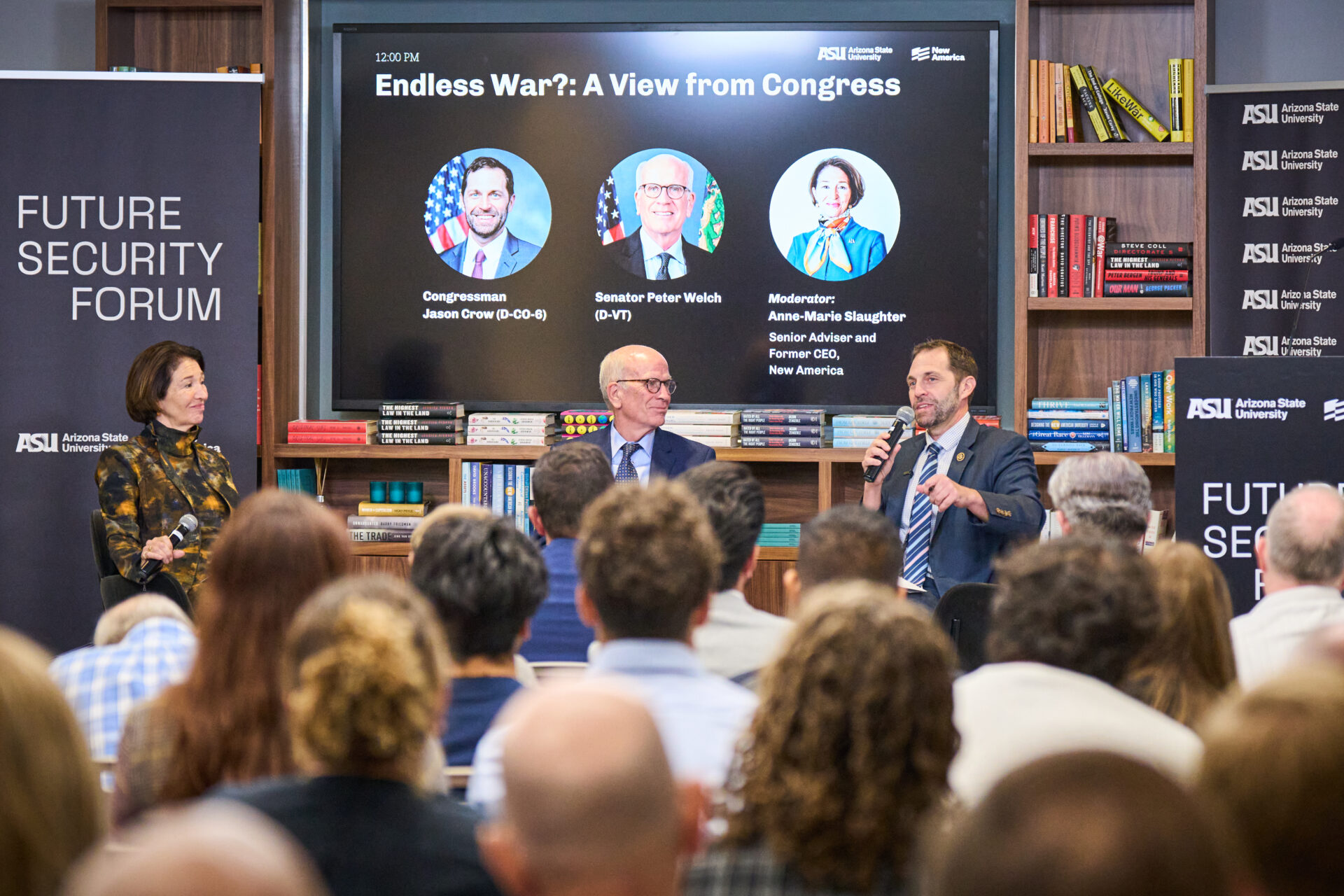
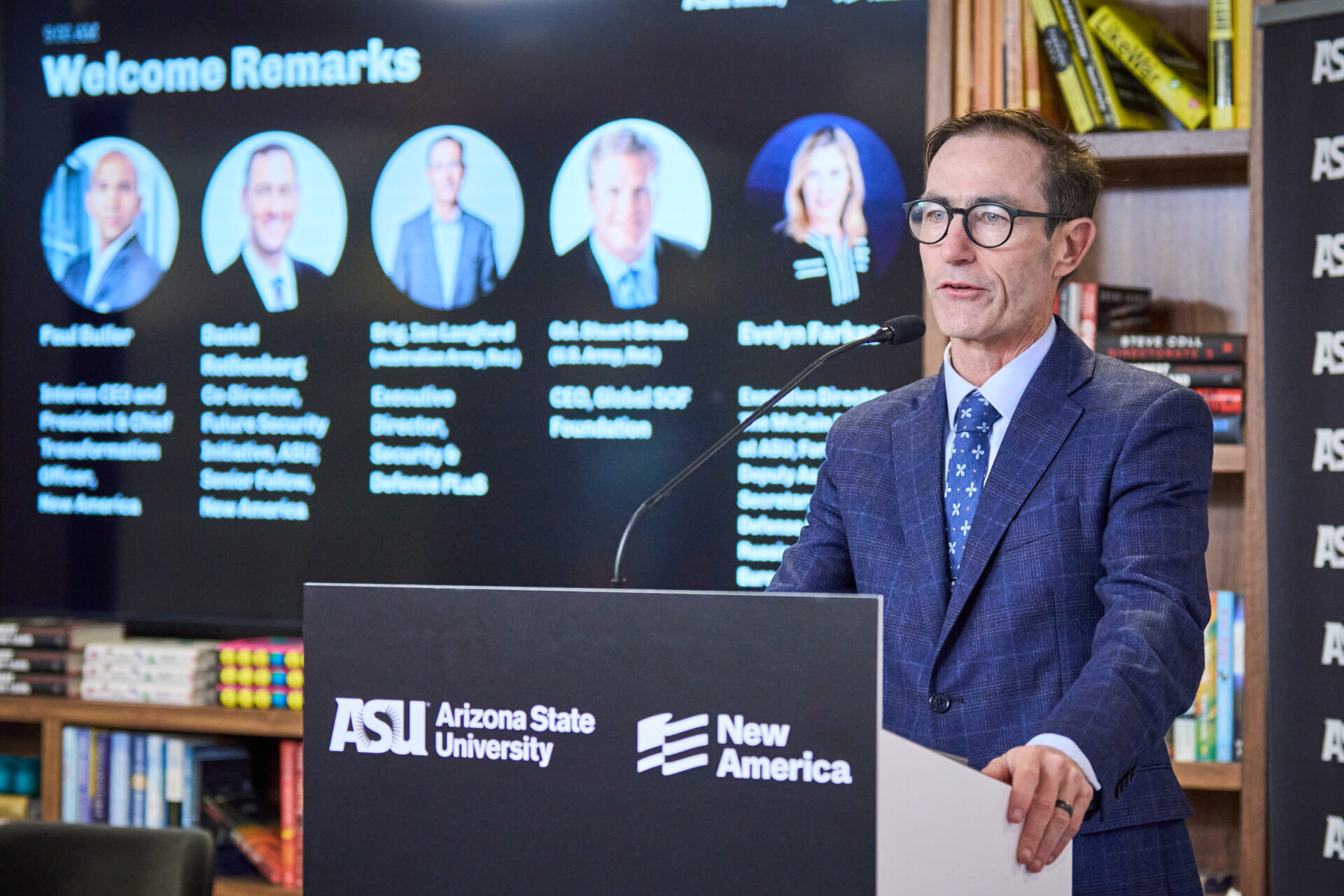
The 2026 Future Security Forum marked the quarter century anniversary of September 11, 2001 by looking back at 25 years of counterterrorism and warfare. The forum was hosted in Washington DC by Arizona State University and New America, in collaboration with Security & Defence PLuS, Global SOF Foundation, the McCain Institute, and Small Wars Journal.
Throughout the day, policymakers, military leaders, academics, journalists and counterterrorism practitioners returned to their personal recollections of 9/11, reflecting on where they were when the attacks happened and how they shaped their lives and careers.
“We are here to memorialise a very solemn event, for many of us it was a prehistory moment in our life. Life has not been the same since.” – Brigadier (Ret) Dr Ian Langford, Security & Defence PLuS
But the forum was not simply an exercise in remembrance. Across discussions about counterterrorism, warfare, hostage recovery, civilian harm, intelligence, journalism and the future threat landscape, speakers returned to a number of common questions: what did we learn, what did we fail to learn, and what do those lessons mean for the threats ahead?
Colonel (Ret) Ioannis Koskinas offered a useful distinction early in the day: “not lessons learned, lessons identified”, which provided a lens for the discussions that followed.
The disconnect between tactical success and strategic outcomes
One of the clearest themes was the gap between being able to execute successful military operations and achieving the political objectives those operations were intended to serve. General Joseph Votel, Former Commander of US Central Command, put this most directly when reflecting on US wars in Iraq and Afghanistan:
“What did not go as well was the linkage of our tactical and operational successes on the battlefield to the strategic objectives. Over time that became a much wider divide which became really difficult to reconcile.”
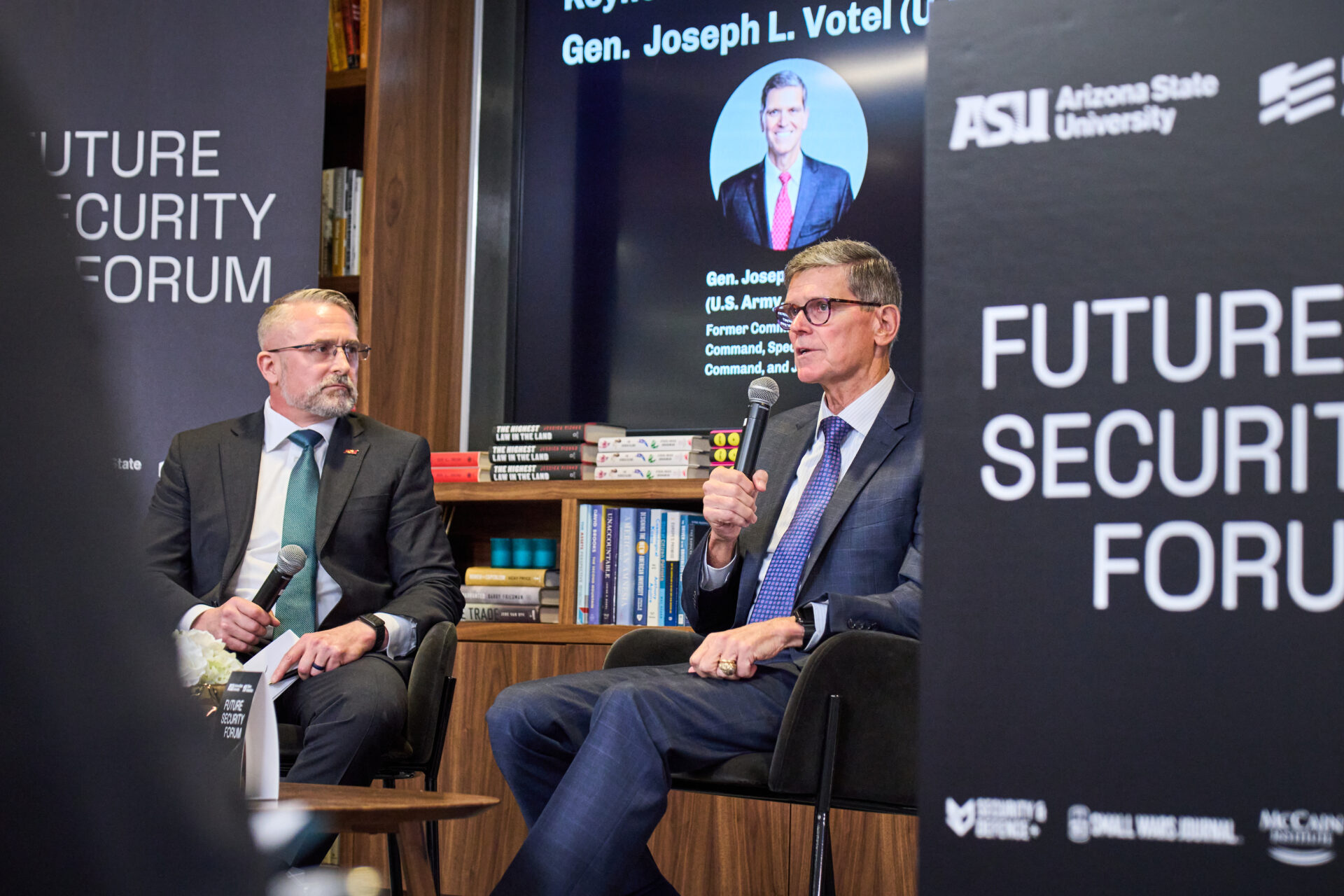
General Votel described how the initial objectives in Iraq shifted into counterinsurgency, nation-building and institution-building, without the long-term objectives and resources necessarily being brought into alignment. As he put it, “the ways and means to support those ends didn’t necessarily match.”
For Audrey Kurth Cronin, this experience points to a lesson that needs to be applied before future conflicts begin: “You have to start with a great political outcome and objective in mind.” Professor David Kilcullen took a similarly forward-looking view:
“My one lesson from the last 25 years is you can be a superpower, you can have the best technology in history, but if you fight a series of distant wars of choice against adversaries that are fighting close wars of survival, don’t expect to win.”
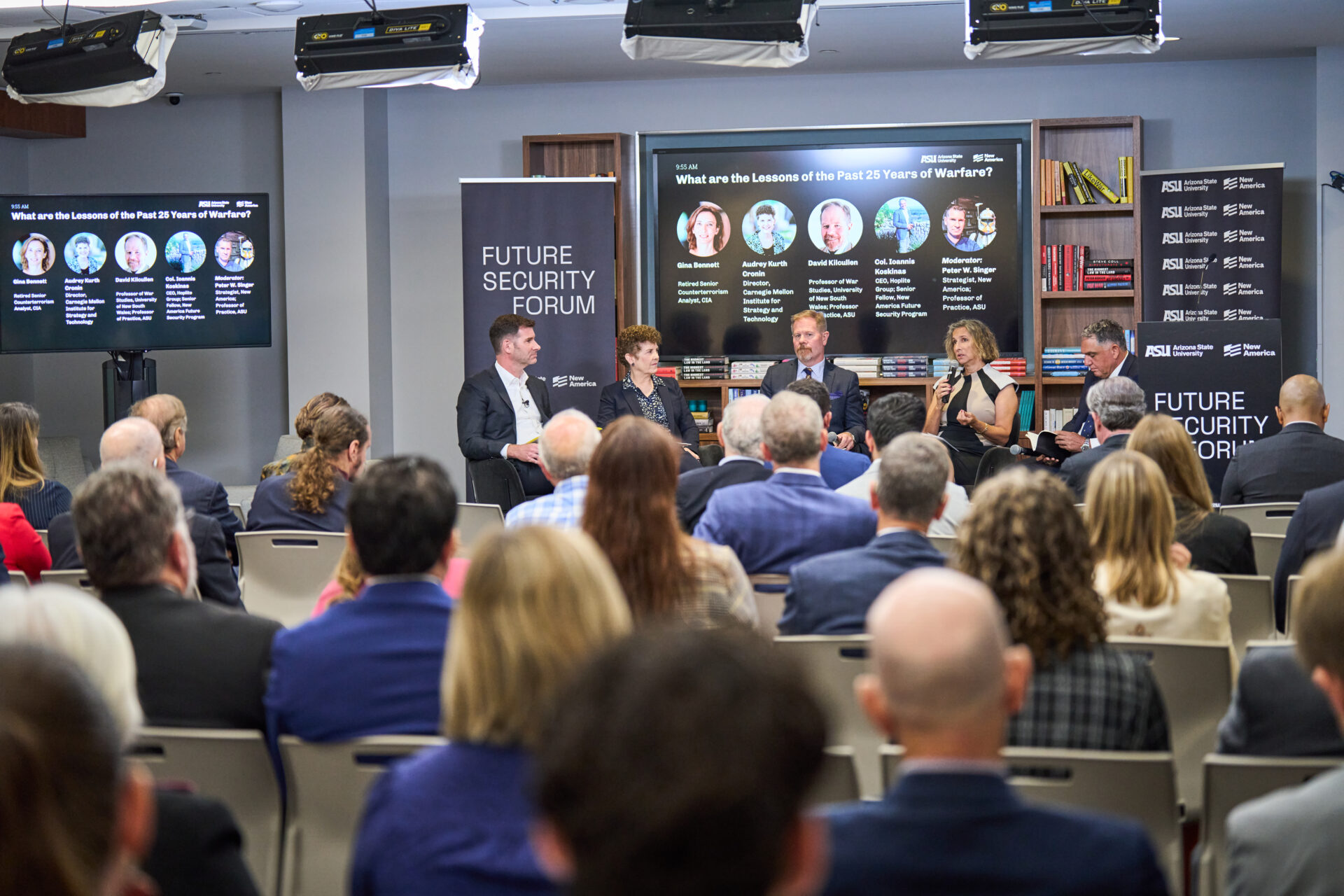
The issue is therefore not simply whether individual operations succeed, but whether military action is connected to a clearly defined and achievable political outcome, and whether the strategy, resources and assumptions behind it are suited to the conflict being fought. That question also surfaced in discussions of Iraq and Afghanistan from the perspective of America’s partners, with speakers pointing to the consequences of entering conflicts without sufficient knowledge of the environment or a sufficiently developed plan for what would follow.
The cost of reacting before understanding
Across the discussions, speakers repeatedly returned to the consequences of acting before fully understanding the adversary, the environment, the nature of the conflict or the likely consequences of intervention. Dame Louise Richardson, President of the Andrew Carnegie Foundation, argued that counterterrorism policy can be distorted by an overly binary understanding of the adversary, where effective policy requires nuance:
“They [terrorists] see the world in Manichean terms, good and evil, black and white… and we’ve simply mirrored that in our response.”
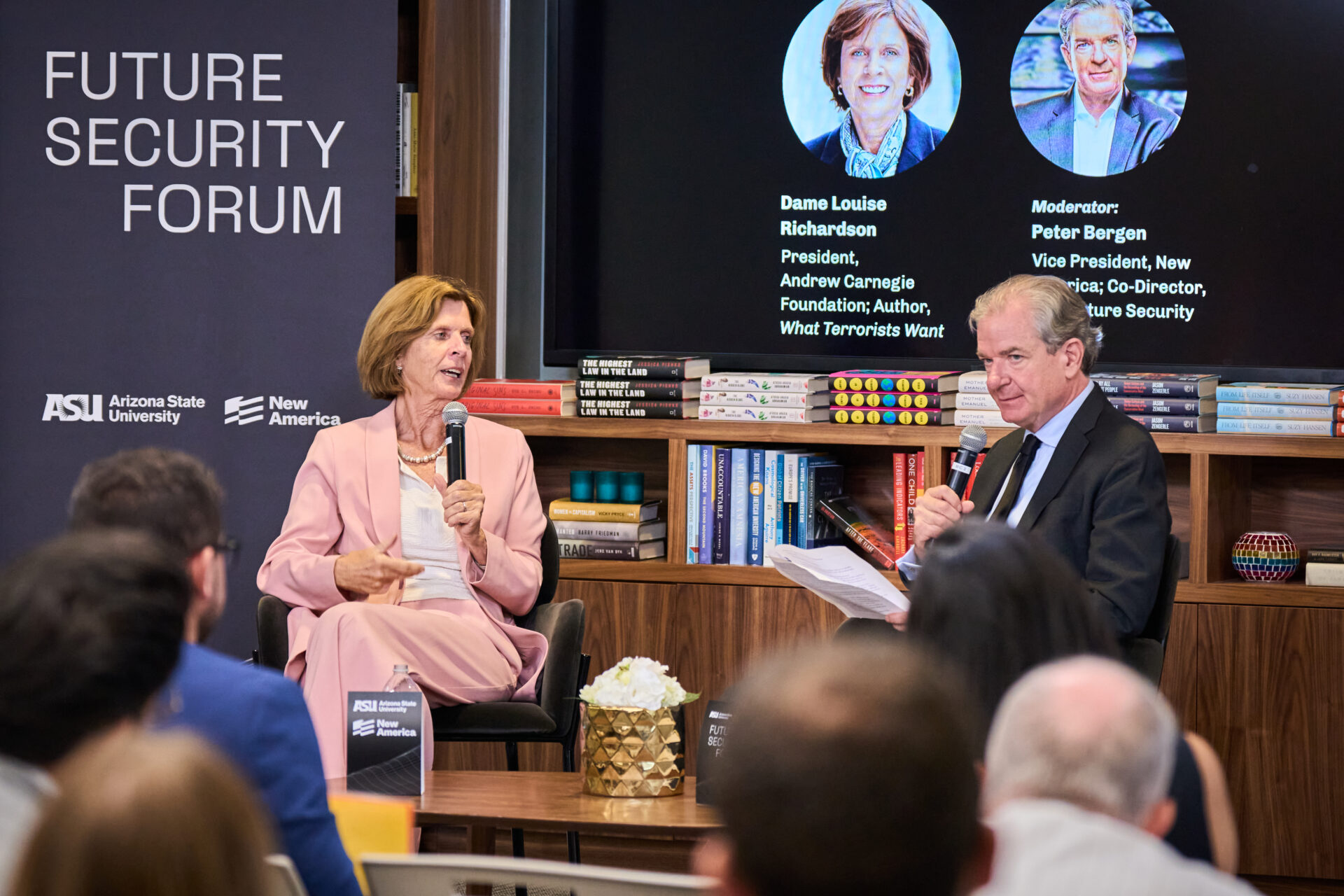
Peter Bergen, Vice President at New America, similarly reflected on the tendency of the US to underestimate the complexity and duration of conflicts by “always thinking it will be over in three to six months”. Dr Ian Langford characterised this as “the strategic hubris dimension to the Western way of war.”
Gina Bennett, a former counterterrorism analyst, framed the problem in terms of understanding the adversary:
“If you don’t identify the game correctly, you’re never going to win… so much of the problem is not identifying who the adversary is, what the adversary wants, what the adversary cannot do and what the adversary’s vulnerabilities are.”
The pressure to act immediately can be understandable after an attack, where pride, fear and anger are evoked, but several speakers emphasised that acting quickly is not the same as acting strategically.
“The bigger the reaction to terrorists, the better for them.” – Dame Louise Richardson, Andrew Carnegie Foundation
Strategic patience and restraint
The alternative proposed by several speakers was not inaction, but a more deliberate approach. Gina Bennett offered perhaps the clearest formulation: “Pausing, observing, deliberating and collaborating. Action is not the first thing.”
The congressional discussion brought the same question into the political sphere. Representative Jason Crow said: “Emotion is really important… but you don’t want emotion to control you.” Senator Peter Welch similarly emphasised restraint:
“The most demanding quality and most elusive quality in our leaders is restraint, aggression is the easy go-to response to something where emotion has been unleashed.”
The recurring argument was therefore not simply for doing less, but for understanding more before deciding what to do, defining the objective, and maintaining the patience to pursue it.
Looking at contemporary conflicts in Iran, Gaza and elsewhere through the lens of civilian harm, investigative reporter Azmat Khan reflected:
“I thought there were these lessons learnt from the War on Terror by 2021, but there has been a real, not just unwinding, but reversion to errors I did not think was possible.”
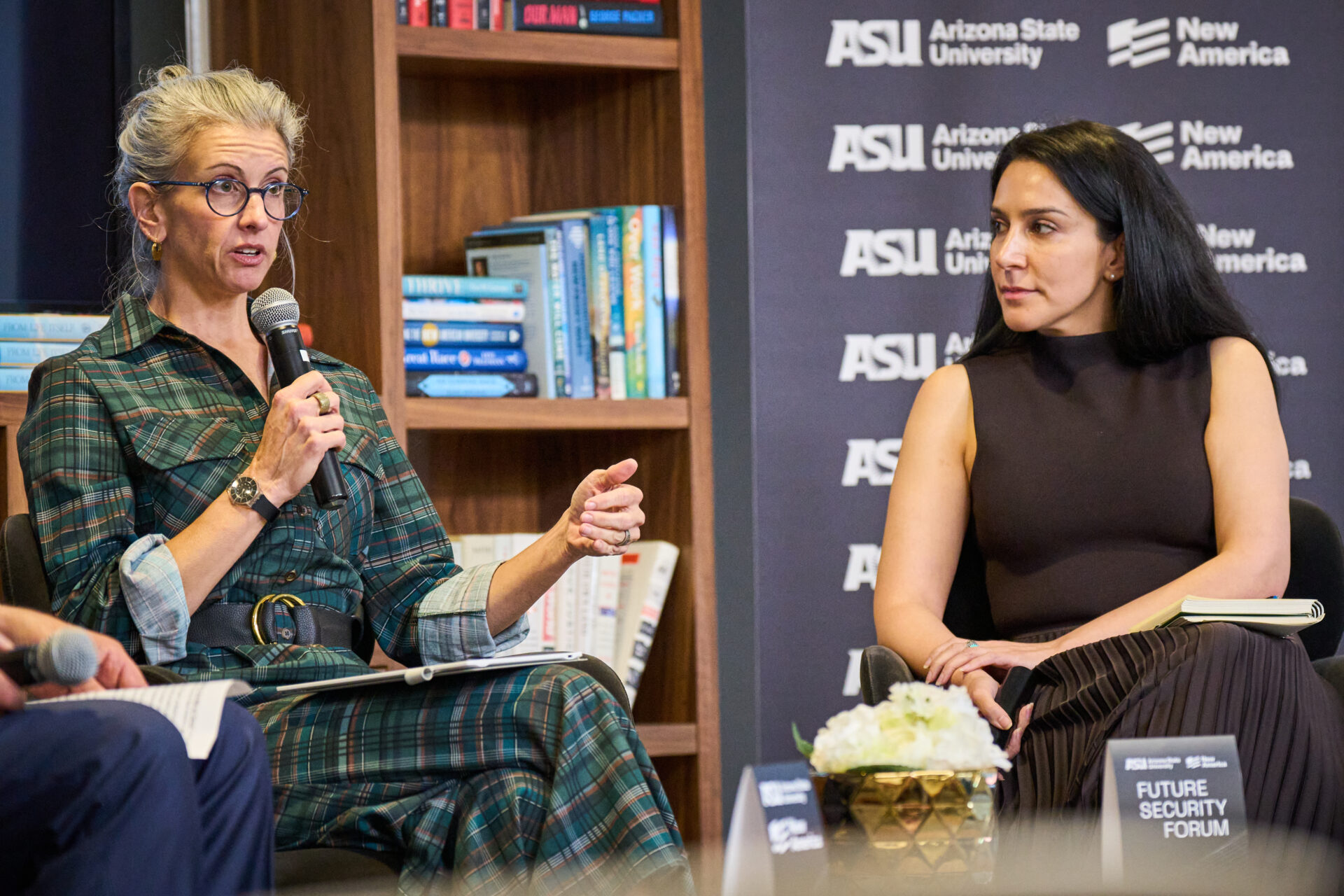
Deep concern about the US’s continued involvement in military conflict was also raised in the congressional discussion. Representative Jason Crow warned against allowing a state of constant conflict to become normalised and, alongside Senator Peter Welch, called for Congress to reassert its constitutional role in decisions about war and the use of military force.
The threat has changed, not disappeared
The forum’s assessment of the past 25 years did not suggest that terrorism has simply receded. Instead, speakers described a threat that has evolved considerably from what was confronted in 2001. At the start of the jihadist movement discussion, journalist Souad Mekhennet captured the paradox:
“The [jihadist] movement has outlived its founders, its caliphate and most predictions of its demise, and at the same moment it has slipped down the priority list of every government that once organised its security policy around it.”

The panel revealed genuine disagreement over Al Qaeda’s current structure, leadership and strength. That disagreement is itself important: 25 years on, speakers were not describing a single, easily defined organisation. However, as Bruce Hoffman noted: “Where we certainly agree, the al Qaeda of today is completely different from the al Qaeda of 25 years ago.”
The geographical picture has also changed. Speakers highlighted the rise of jihadist activity in Africa, particularly JNIM in West Africa, ISIS in the Sahel and Al Shabaab in Somalia. Colin Smith from the United Nations pointed to the movement of ransom payments as evidence of the continuing ability of terrorist organisations to operate across borders:
“..ransom payments and the way the money has flowed, I think strongly suggests that it is still a global network, it is able to prioritise and plan and transfer funds and resources globally.. It’s thinking globally and it’s able to act globally.”
Meanwhile, the counterterrorism discussion highlighted how the growth of online communities, social media and lone-actor violence has changed the intelligence problem. As Christy Abizaid, former Director of the National Counterterrorism Center, emphasised, today’s terrorist threat is fundamentally different from the hierarchical Al Qaeda organisation presented by 9/11. The challenge is therefore not simply identifying where terrorism has moved geographically, but recognising when apparently local or disconnected activity becomes part of a wider transnational threat.
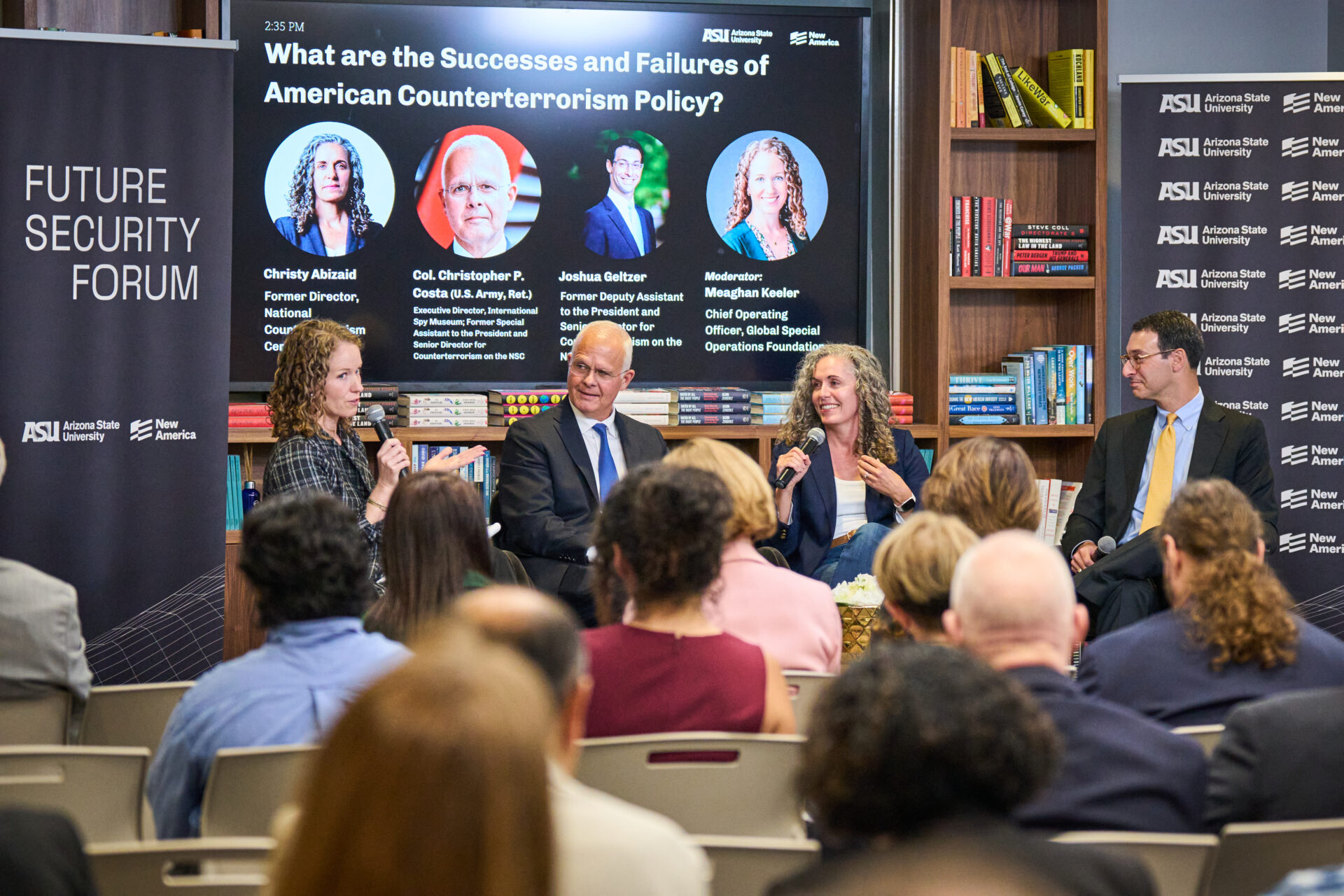
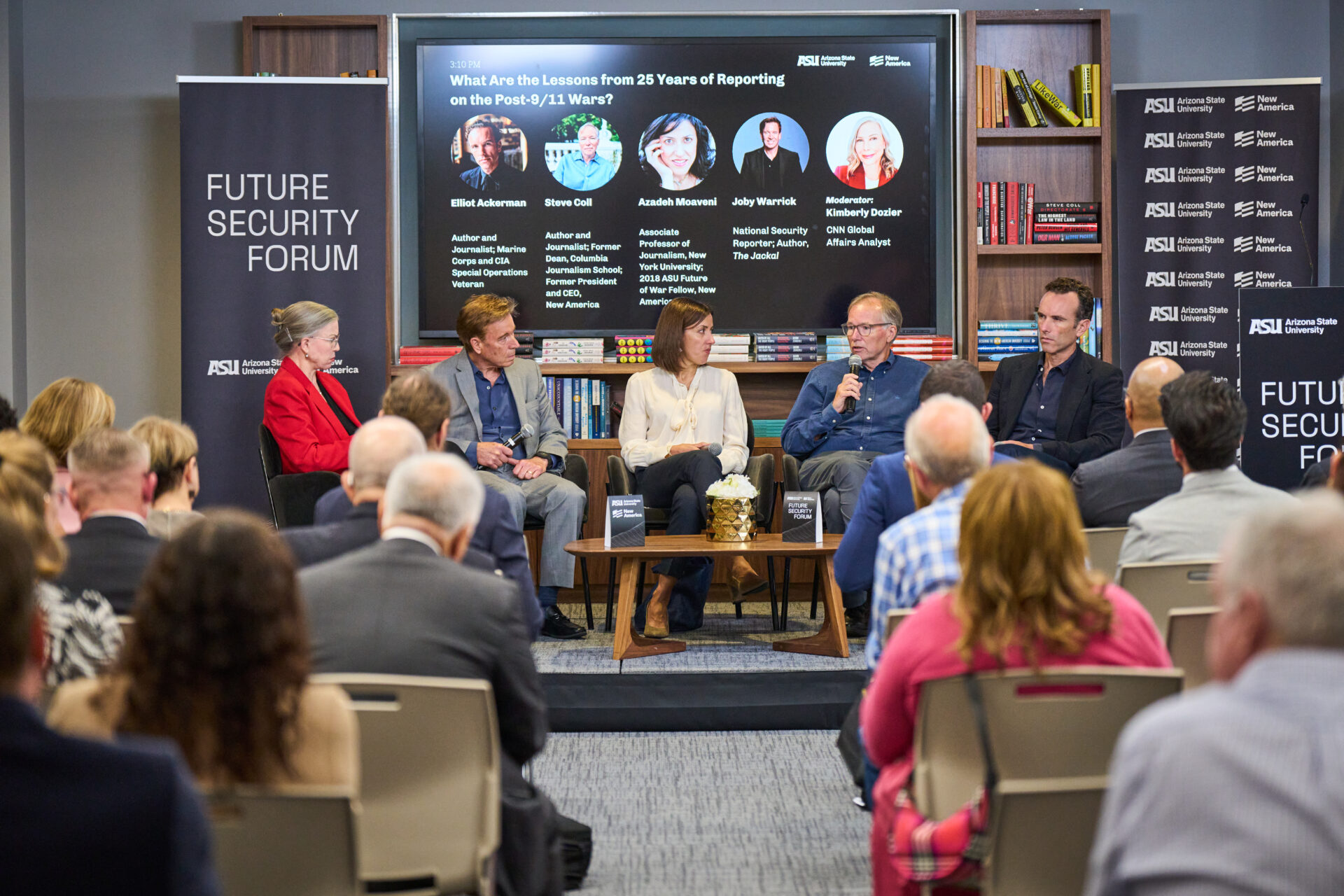
The changing threat environment has also made access harder for those reporting on it. As journalist Joby Warrick reflected:
“The challenge of trying to get to that other side, to understand what the other side is thinking and feeling and what those grievances are, is a far greater challenge than it was 25 years ago.”
What comes next: a new generation of threats
The forum ultimately turned from what happened after 9/11 to whether the lessons of that period are being applied to threats that look very different from those of 2001. Speakers identified emerging technologies that could challenge the assumptions and structures developed over the past 25 years, in particular AI and synthetic biology. Evelyn Farkas warned of the existential threat of AI, but argued that regulation is possible:
“We can have AI and we can regulate it the way that we regulate nuclear material and nuclear weapons. It is possible and we are in a moment when leadership is important…”
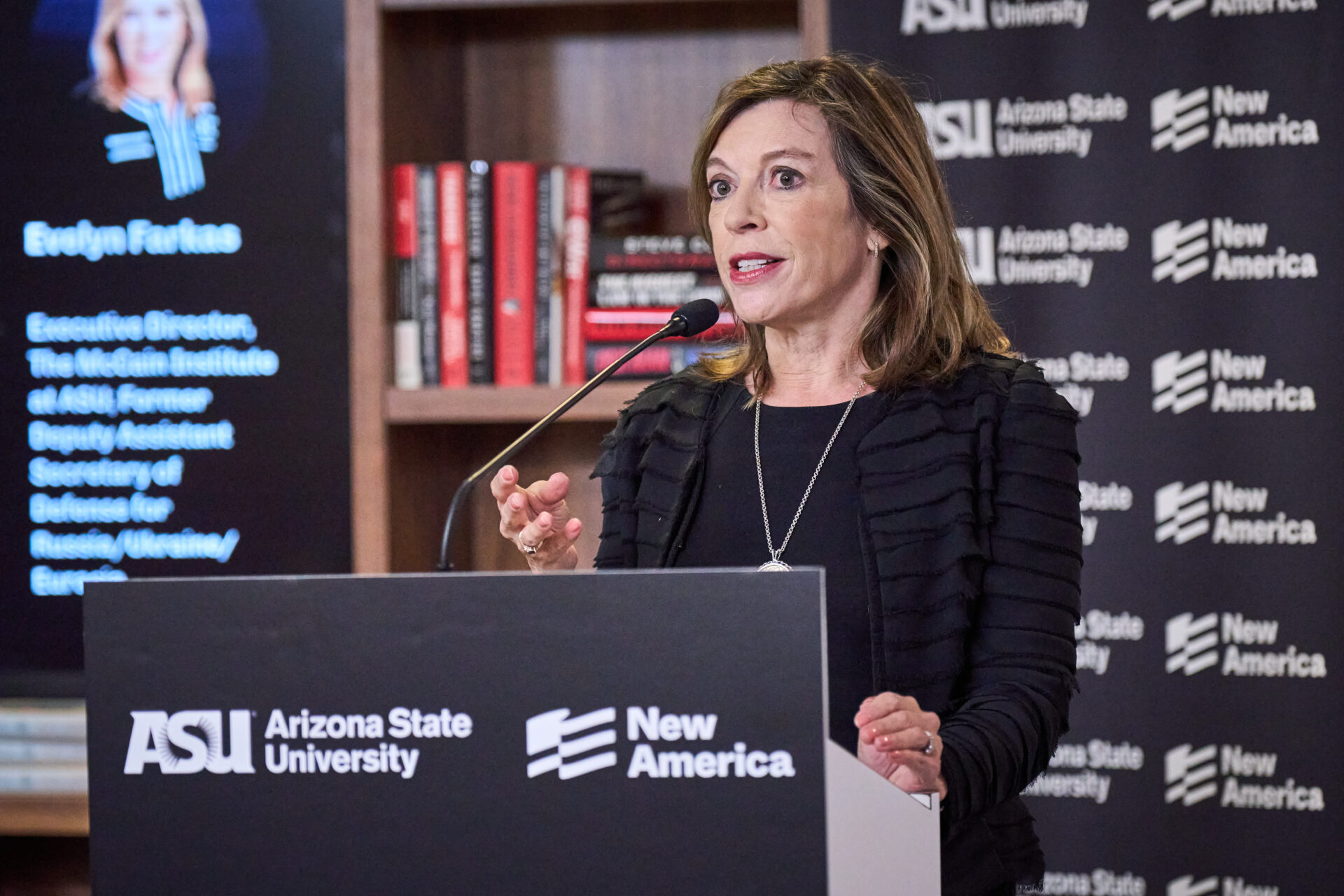
Audrey Kurth Cronin highlighted bioterrorism as another area where preparation should precede crisis: “That is a threat that is very predictable.. we need to get ahead of it.” The discussion of emerging threats was not limited to individual technologies. Speakers also pointed to the way technological change can lower barriers to entry, allowing capabilities once concentrated in states or sophisticated organisations to become accessible to a wider range of actors.
That creates a challenge familiar from the past 25 years, but in a different form: how do governments identify a threat early enough to prepare for it, without repeating the tendency to overreact to the threat immediately in front of them?
What should the next 25 years require?
The forum did not produce a single prescription for the next 25 years, but across very different discussions, several principles recurred. Understanding the problem before acting. Defining the political objective. Matching ends, ways and means. Recognising the limits of military force. Building effective partnerships. Maintaining strategic patience. And ensuring that attention to one category of threat does not lead to complacency about another.
The forum also repeatedly returned to the people behind those strategic questions: the victims of 9/11, service members, civilians caught in conflict, hostages and their families, journalists and partners who experienced the wars of the past 25 years in very different ways.
A quarter century after 9/11, the challenge is in identifying what those 25 years of experience should change about how future threats are understood, how decisions are made, and how societies respond when the next crisis arrives. Anne-Marie Slaughter offered a hopeful perspective:
“The vision you all paint is a vision of a country that can pull together and meet shared challenges.”
Security & Defence PLuS extends sincere thanks to all speakers and participants for their insights and collaboration. The full event recording is available to view online here: Future Security Forum 2026.